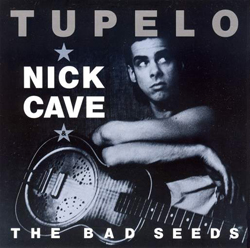
Tupelo – Nick Cave and the Bad Seeds
“Tupelo” is a Nick Cave and the Bad Seeds song released on The Firstborn Is Dead (1985). In Cave’s catalog it feels like a raw, unflinching meditation on destruction—where Tupelo isn’t just a Mississippi town, but the birthplace of Elvis Presley, reimagined as something apocalyptic: part warning, part prayer, often both at once.
Context
The Firstborn Is Dead is a landmark in the band’s discography—more direct and elemental than the introspective gothic rock many people associated with their earlier work. That edge fits “Tupelo” well: the song plays like a reckoning that won’t be ignored, unfolding in real time through Biblical imagery and the catastrophic 1936 flood that struck Tupelo just months before Elvis’s birth. Cave weaves myth and history together, transforming the King’s origin story into something primal and violent.
Themes and Meaning
At its core, “Tupelo” circles around birth, destiny, and the violence that defines them:
- Destruction as certainty: The flood isn’t romanticized—it’s depicted as inevitable, brutal business, a baptism by catastrophe.
- Elvis as mythic figure: Cave doesn’t mention Elvis by name, but the song is steeped in the iconography of his birth—Tupelo becomes ground zero for American myth-making.
- Mythic realism vs. euphemism: Cave writes from a perspective that’s matter-of-fact and unapologetically direct, treating Elvis’s arrival as both sacred and savage.
- Guilt and complicity: What remains are moments of reckoning—responsibility, aftermath, the moral detail that defines the experience.
Musical Feel
Rather than smooth production, the track leans into a sparse, blues-inflected arrangement that mirrors the lyric’s gravity and Elvis’s own roots in Delta blues and gospel. It doesn’t let the narrative soften into abstraction; it gives it weight, like something that won’t let you look away.
Why it lasts
“Tupelo” works because it doesn’t moralize about fate or Elvis from a distance. It treats violence and birth as something that defines a moment—and sometimes destroys you. Cave doesn’t offer easy answers, just a scene that feels uncomfortably real: caught between power, consequence, divine intervention, and the stark truth that even icons are born from chaos. The song transforms Elvis’s origin into American gothic—equal parts reverence and dread.